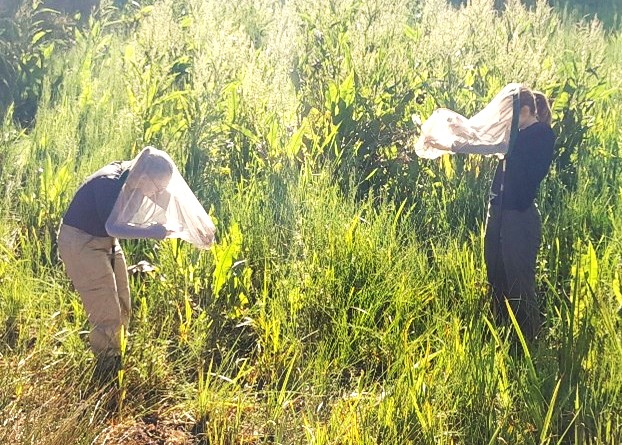

I was delighted to be asked to spend two weeks in July this year teaching at the magnificent Knepp Estate in West Sussex, teaching new ecologists and students of conservation invertebrate/diptera fieldwork and identification.
The study camp was set up inside a large, fenced area on the Knepp Estate in West Sussex, meaning we were separated from the many large cattle, Tamworth pigs and Exmoor ponies grazing and rootling nearby.
The main hub of activities was a large stretch tent where meals, lectures and in the case of invertebrates, sorting and identification work was carried out.
The students were split into small groups and rotated through each of the topic areas with me on invertebrates and diptera and my colleagues, covering areas such as carbon capture, aquatic invertebrate surveying, a full suite of testing on water quality (nitrates, phosphates), fish, bankside vegetation, birds, trees and flowering plants and general habitat surveys.
My working week included the classroom-based teaching requirements plus attending to three Malaise traps running throughout the period, changing the capture bottle every four days.
The format of the teaching day was adapted depending on weather conditions and the physical capabilities of the students within each group. The extreme heat on some days meant earlier starts, walking out first thing for the fieldwork and collection and returning to the relative cool of the camp by late morning.
Thanks to Erica McAlister from the Natural History Museum, the Knepp Estate and Operation Wallacea for a fantastic opportunity to teach such a wonderfully receptive group of people.